Ideas, inventions, creative work and brand identities can be valuable assets for individuals and businesses. However, without appropriate legal protection, these assets may be copied, used without permission or involved in disputes. This is where intellectual property law becomes important.
If you are wondering what is intellectual property law, it is the area of law that protects certain creations of the mind, including inventions, artistic works, business names, logos and product designs. Intellectual property rights can help creators and businesses control how their protected work is used and, where applicable, benefit financially from their ideas and innovations.
In the UAE, intellectual property protection is particularly relevant for startups, established companies, entrepreneurs, artists, technology businesses and investors. Understanding the available protections can help you make informed decisions about your business assets and reduce the risk of intellectual property disputes.
What Is Intellectual Property Law?
Intellectual property law establishes legal protections for qualifying creations, inventions, designs and identifying features used in business. These protections are intended to recognise creativity, encourage innovation and help rights holders prevent certain unauthorised uses of their protected assets.
For example, a company may use a trademark to distinguish its products from competitors, while a software developer may rely on copyright protection for original code. An inventor may seek patent protection for an eligible invention, subject to the applicable legal requirements.
Intellectual property is different from physical property. Owning a building, for example, does not automatically give someone ownership of every design, logo or creative work associated with it. Intellectual property rights concern legally recognised interests in intangible assets.
The UAE has legislation covering trademarks, copyright and neighbouring rights, and industrial property rights. The applicable protection depends on the type of asset, the relevant legal requirements and the circumstances of the case.
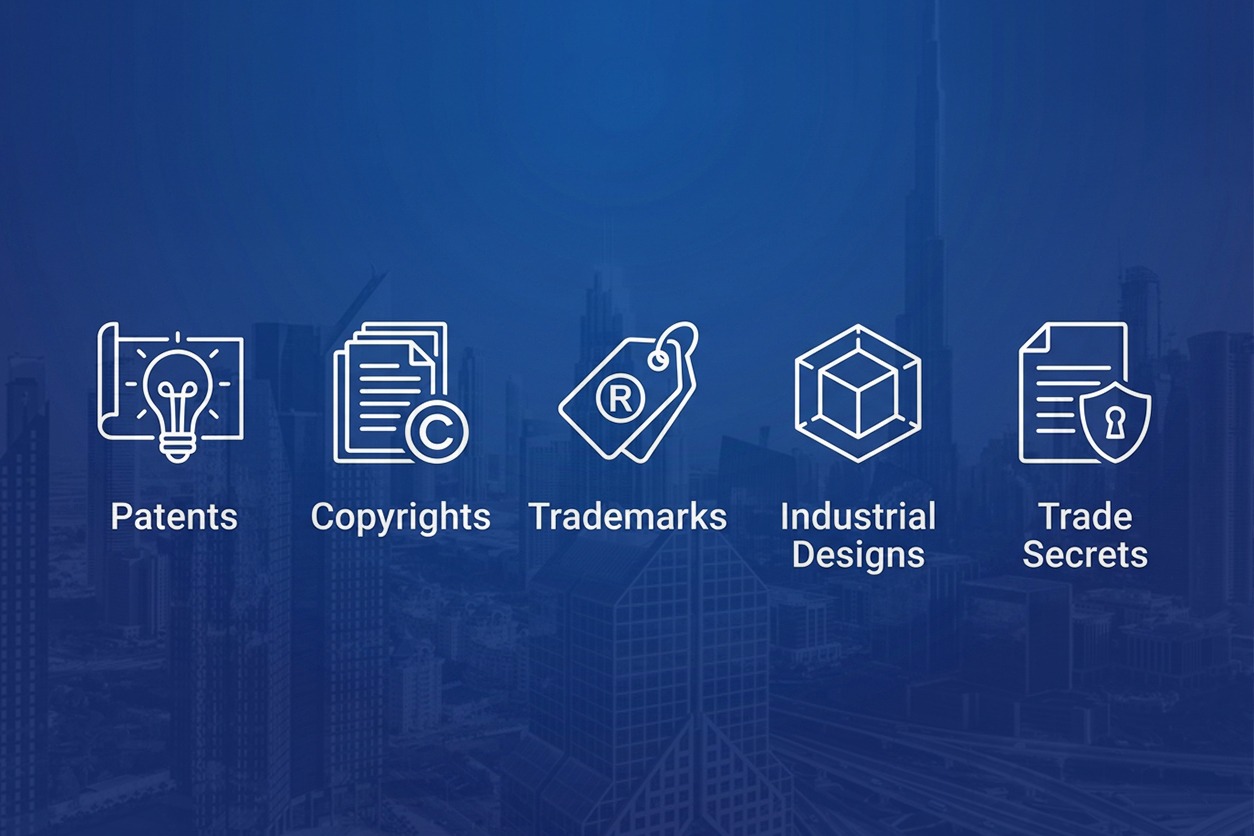
What Are the Main Types of Intellectual Property?
Intellectual property law covers several forms of protection. Understanding their differences can help individuals and businesses identify which rights may be relevant to their work.
1. Trademarks
A trademark helps distinguish the goods or services of one business from those of another. It may include a brand name, logo, symbol, word or another qualifying sign.
For example, a company may register its brand name and logo to help protect its business identity in the UAE. Trademark protection can be important when launching a new product, expanding into new markets or building a recognisable brand.
Businesses should check whether a proposed mark meets the relevant requirements before applying for registration. They should also consider monitoring potential unauthorised use of their trademarks.
2. Copyright
Copyright protects qualifying original creative works. These may include books, articles, photographs, music, films, artwork, software and certain other original works.
For example, a photographer may have copyright protection in original photographs, while a software developer may hold rights in qualifying original computer code. Copyright does not generally protect an abstract idea by itself; it protects qualifying expression of that idea under the applicable law.
Businesses that publish website content, marketing materials, training resources or digital products should understand how copyright applies to their work and the materials they obtain from others.
3. Patents
A patent may protect an eligible invention that meets the relevant legal requirements. It can give the rights holder specified exclusive rights over the invention for a limited period, subject to the applicable law.
Patents can be relevant to businesses developing new technologies, technical processes, machinery or innovative products. Before pursuing patent protection, an inventor should assess whether the invention qualifies and understand the registration process and related requirements.
4. Industrial Designs
Industrial design protection concerns qualifying features of a product’s appearance, such as its shape, pattern or ornamental design.
For example, a manufacturer may wish to protect the distinctive appearance of a product where it meets the applicable legal requirements. Industrial design protection can be particularly relevant to product developers, manufacturers and businesses competing through design and presentation.
5. Trade Secrets and Confidential Information
Businesses may also need to protect valuable confidential information, such as certain manufacturing methods, commercial strategies, customer information or proprietary processes.
The appropriate protection depends on the nature of the information and the legal requirements that apply. Businesses can consider confidentiality agreements, access controls and internal policies to reduce the risk of unauthorised disclosure or use.
Why Is Intellectual Property Law Important for Businesses in the UAE?
Intellectual property can form an important part of a company’s commercial value. A recognised brand, original software, innovative product or distinctive design may help a business stand out in a competitive market.
Understanding intellectual property law can help businesses identify which assets may qualify for protection and what steps they should consider before launching a product or sharing confidential information. It can also help clarify ownership arrangements when a company works with employees, contractors, designers, developers or business partners.
For startups and growing businesses, intellectual property planning may be relevant when choosing a brand name, developing a new product, entering commercial agreements or expanding into new markets. Taking appropriate steps early can help reduce uncertainty about ownership and the permitted use of business assets.
Intellectual property rights may also support licensing and commercialisation opportunities. Depending on the rights involved, a business may be able to authorise another party to use protected intellectual property under agreed terms. Any such arrangement should be documented carefully to clarify the scope of permission, payment terms, responsibilities and restrictions.
How Does Intellectual Property Law Work in the UAE?
The UAE has a legal framework covering different categories of intellectual property. The applicable rules depend on the type of protection being sought and the facts surrounding the asset.
The Ministry of Economy and Tourism is the relevant authority for key intellectual property registration services, including trademarks, patents and certain industrial property rights. Copyright and neighbouring rights are also covered by UAE legislation.
The process differs according to the type of intellectual property. A trademark application, for instance, is different from a patent application. Some rights involve registration procedures, while copyright protection may arise under the applicable law when a qualifying original work is created.
Before making an application, businesses should identify the asset they want to protect, check the relevant requirements and prepare the necessary documents. They should also consider whether protection is needed in the UAE alone or in additional jurisdictions.
What Happens When Intellectual Property Rights Are Infringed?
Intellectual property infringement may occur when someone uses protected material or rights without the necessary authorisation, where that use breaches the applicable law.
Examples may include using a protected trademark in circumstances that infringe another party’s rights, reproducing copyrighted material without permission or exploiting a protected invention without the required authorisation.
The appropriate response depends on the type of right, the available evidence and the circumstances of the alleged infringement. A rights holder may need to gather relevant records, review ownership documents, preserve evidence of the unauthorised use and obtain legal advice about available options.
Businesses should avoid assuming that every similarity or unauthorised use automatically amounts to infringement. The legal position depends on the relevant rights, applicable legislation, exceptions and facts of the case.
Seeking advice early may help a rights holder understand the available options and determine whether negotiation, formal notices, administrative procedures or legal proceedings may be appropriate.
How Can Businesses Protect Their Intellectual Property?
Businesses can take practical steps to manage and protect their intellectual property assets.
- Identify valuable assets: List relevant brand names, logos, original content, software, product designs, inventions and confidential business information.
- Check ownership: Review employment agreements, contractor arrangements and other documents to understand who owns or may use the relevant intellectual property.
- Consider registration: Where registration is available and appropriate, check the relevant requirements and application procedures.
- Use written agreements: Clearly document licensing permissions, confidentiality obligations and intellectual property ownership arrangements.
- Keep records: Retain relevant creation dates, drafts, agreements, registration documents and evidence of authorised use.
- Monitor potential misuse: Keep an eye on possible unauthorised use of your brand, creative work or other protected assets.
- Seek legal guidance: Obtain advice where ownership is unclear, a potential infringement arises or a commercial agreement involves valuable intellectual property.
These measures can help businesses take a more organised approach to intellectual property management. The right steps will depend on the nature of the asset, the business model and the applicable legal requirements.
What Is the Difference Between Intellectual Property Law and Property Law?
Intellectual property law and real estate law deal with different types of assets.
Intellectual property law concerns qualifying intangible assets, such as trademarks, inventions, original creative works and industrial designs. Real estate law, on the other hand, concerns land, buildings and related property transactions, agreements and disputes.
For example, a company developing a new product may need to consider trademark or patent protection. A person purchasing an apartment in Dubai may instead need advice about a sale and purchase agreement, ownership documentation or other property-related matters.
Although these areas are different, businesses may encounter both. A company leasing office space, purchasing commercial premises or negotiating a property agreement may need real estate legal guidance alongside advice about its intellectual property assets.
Property Lawyers Services in Dubai
People searching for Property Lawyers Services in Dubai are generally looking for assistance with real estate matters rather than intellectual property protection. Depending on the circumstances and the services offered by the legal provider, property law assistance may include reviewing sale and purchase agreements, examining contractual obligations, advising on property documentation and addressing real estate-related disputes.
HN Legal Consultants provides legal services in real estate and property law, alongside contracts law, commercial and business law advisory, construction law and dispute resolution. Individuals and businesses can contact the firm to enquire about legal assistance relevant to their property transactions or contractual concerns.
When Should You Seek Legal Advice About Intellectual Property?
It may be useful to seek legal guidance before launching a new brand, commercialising an invention, licensing creative work or entering an agreement involving intellectual property rights.
Advice may also be important when two parties disagree about ownership, when a former employee or business partner uses confidential information, or when you discover possible unauthorised use of your protected work.
If your business operates across borders, you should also consider where protection is required. Intellectual property rights and registration procedures can vary between jurisdictions, so protection in one country should not automatically be assumed to provide identical protection elsewhere.
A legal professional can help assess the relevant documents and circumstances, explain potential options and identify questions that require further investigation.
Frequently Asked Questions
What is intellectual property law in simple terms?
Intellectual property law protects certain creations of the mind, including inventions, original creative works, trademarks and qualifying designs. It establishes rights and rules concerning how these assets may be used, protected and commercialised.
What are the four main types of intellectual property?
Four commonly discussed categories are trademarks, copyright, patents and industrial designs. Trade secrets and confidential information are also important considerations for many businesses.
Is intellectual property protected by UAE law?
Yes. The UAE has legislation covering trademarks, copyright and neighbouring rights, and industrial property rights. The type and extent of protection depend on the relevant asset and applicable legal requirements.
How can I register intellectual property in the UAE?
The process depends on the type of intellectual property. The UAE Ministry of Economy and Tourism provides relevant registration services and guidance for trademarks, patents and certain industrial property rights. Applicants should review the applicable requirements before submitting an application.
What should I do if someone uses my intellectual property without permission?
Keep relevant evidence, review your ownership and registration documents where applicable, and seek legal advice about the circumstances. The appropriate response depends on the type of right, the alleged infringement and the available legal options.
Are intellectual property law and real estate law the same?
No. Intellectual property law concerns qualifying intangible assets such as brands, inventions and creative works. Real estate law concerns land, buildings, property transactions, agreements and related disputes.
Can a property lawyer in Dubai help with intellectual property matters?
A lawyer’s suitability depends on their practice areas and experience. Property lawyers generally focus on real estate transactions and disputes, while intellectual property matters may require a professional with relevant IP experience. Ask the legal provider to confirm the scope of services available for your specific issue.
Conclusion
Understanding what intellectual property law means can help individuals and businesses recognise the value of their creative work, inventions, brands and designs. From trademarks and copyright to patents and industrial designs, the right form of protection depends on the asset and the applicable UAE legal requirements.
Taking time to identify valuable intellectual property, clarify ownership and understand registration or enforcement options can help businesses manage legal risks and make better-informed commercial decisions.
HN Legal Consultants provides legal consultancy services in areas including real estate and property law, contracts, commercial and business law, construction law and dispute resolution. If you need help with a property transaction or related contractual matter in Dubai or elsewhere in the UAE, contact the firm to discuss your requirements.
HN Legal Consultants
Website: https://www.hnlegal.ae/
Phone: +971 4 871 4532
Email: inquiry@hnlegal.ae