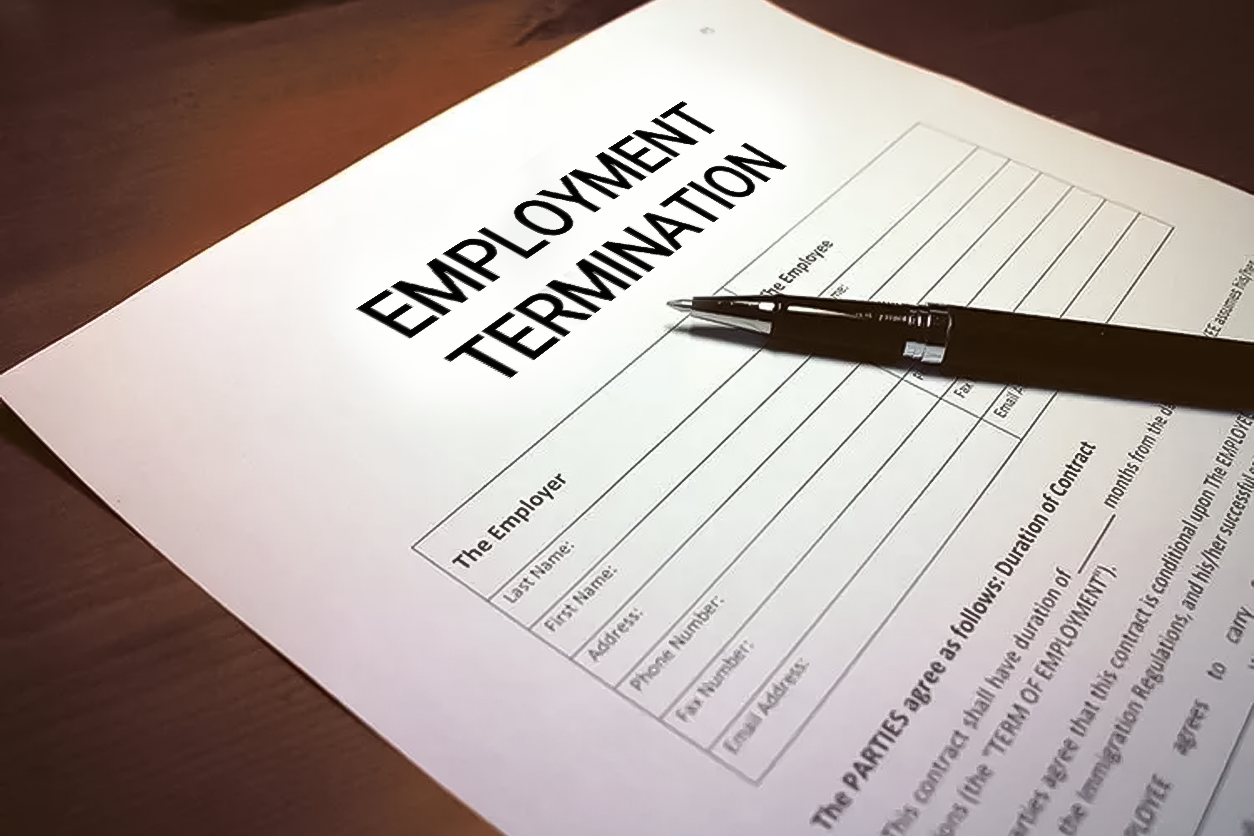
Understanding employment termination law in UAE is important for both employees and employers who want to end an employment relationship fairly and lawfully. Whether an employee resigns, an employer decides to dismiss a member of staff, or a fixed-term contract reaches its end, the correct legal procedures must be followed. These procedures can affect notice periods, final salary payments, end-of-service gratuity and other employment entitlements.
The UAE Labour Law, principally Federal Decree-Law No. 33 of 2021 and its amendments, sets out key rules for employment relationships in the private sector. These rules explain when an employment contract may be terminated, when notice is required and which rights may apply when employment ends. HN Legal Consultants can help individuals and businesses understand their employment law obligations, assess potential disputes and identify appropriate next steps.
What Is Employment Termination Law in UAE?
Employment termination law in UAE governs how an employment relationship can legally come to an end. It covers resignation, dismissal, the expiry of an employment contract, mutual agreement and certain circumstances in which either party may terminate without serving the usual notice period.
The applicable rules depend on factors such as the employee’s contract, length of service, reason for termination and the employment jurisdiction. The general federal private-sector Labour Law does not apply identically to every employment arrangement. For example, domestic workers have a separate legal framework, while certain financial free zones, including the DIFC and ADGM, have their own employment regulations.
Employees and employers should therefore check which legal framework applies before taking action.
When Can an Employment Contract Be Terminated in the UAE?
Under the UAE’s federal private-sector Labour Law, an employment contract may end in several circumstances, including:
- Both parties agree in writing to terminate the contract.
- The contract expires and is not renewed or extended.
- Either party terminates the contract for a legitimate reason while following the applicable notice requirements.
- Other circumstances recognised by the law bring the employment relationship to an end.
An employer should not assume that a contract can be ended without considering the employee’s rights. Similarly, employees should review their contract and the relevant legal requirements before resigning.
Keeping written records of the termination decision, correspondence and any agreement between the parties can help prevent misunderstandings.
Notice Period Under UAE Employment Law
The notice period is an important part of the employment termination process. Under the general federal private-sector rules, the agreed notice period must normally be at least 30 days and no more than 90 days.
The employment contract should be checked to confirm the applicable period. During notice, the employment relationship generally continues, and the employee is entitled to their wage in accordance with the law and contract.
What Happens If Notice Is Not Given?
If a party fails to serve the required notice, notice-period compensation may be payable. This is generally calculated using the employee’s most recent wage and the unserved portion of the notice period, subject to the applicable legal rules.
The parties may agree to reduce or waive the notice period where permitted, but any agreement should protect the rights and entitlements of both sides.
When an employer terminates an employee’s contract, the employee may also be entitled to one unpaid day off per week during the notice period to search for another job, subject to the applicable legal conditions.
Can an Employer Terminate an Employee Without Notice?
The UAE Labour Law permits dismissal without notice only in specified circumstances and subject to legal requirements. Under the general federal private-sector framework, examples may include certain forms of serious misconduct, fraud, disclosure of confidential information causing legally recognised harm, or unjustified absence that meets the statutory conditions.
However, an employer cannot rely on an allegation alone without following the required procedure. For dismissal under the relevant statutory grounds, the employer must conduct a written investigation and provide a written, reasoned dismissal decision in accordance with the law.
Employees who receive a dismissal without notice should keep copies of the dismissal letter, employment contract, warnings, investigation documents and relevant communications. They may seek legal advice to assess whether the circumstances and procedure comply with the applicable rules.
Can an Employee Resign Without Notice?
In certain circumstances, an employee may be entitled to leave without notice while retaining their legal entitlements. The law recognises specific situations, including certain serious breaches of the employer’s obligations, workplace assault or harassment, grave workplace dangers that are not addressed, and instructions to perform fundamentally different work without the required consent.
These exceptions have conditions that must be satisfied. For example, particular reporting and notification requirements may apply. An employee should not assume that every workplace disagreement or delayed payment automatically permits resignation without notice.
Before leaving a job, it is sensible to document the issue, review the contract and obtain advice about the correct legal process.
Employee Rights After Employment Termination
Employees may have several rights when their employment ends. The exact entitlements depend on the circumstances, contract and applicable law.
1. Outstanding Salary
Employees should receive outstanding wages and other amounts lawfully due to them. They should review their final payslip and compare it with their salary records, approved overtime, contractual benefits and any lawful deductions.
2. Unused Annual Leave
An employee may be entitled to payment for accrued, unused annual leave when employment ends, calculated according to the applicable legal rules. Employees should check their leave balance and how the employer has calculated the final amount.
3. End-of-Service Gratuity
Under the general federal private-sector framework, an eligible foreign full-time employee who completes at least one year of continuous service may qualify for end-of-service gratuity. The usual calculation is based on the basic wage:
- First five years of service: 21 days’ basic wage for each year.
- Service beyond five years: 30 days’ basic wage for each additional year.
The calculation may include a proportion for part of a year after the qualifying service period, subject to the law. Unpaid absence may be excluded from the service period, and the total gratuity under the standard scheme is generally capped at two years’ wage. Different rules may apply to alternative savings schemes, other work patterns and particular employment jurisdictions.
4. Notice Pay or Compensation
If the required notice is not served, the affected party may be entitled to notice-period compensation under the applicable rules. An employee should check whether the employer has paid the correct amount or whether a lawful exception applies.
5. Payment of Final Entitlements
Under the general federal private-sector Labour Law, an employer must pay the employee’s wages and other entitlements due under the law and contract within 14 days from the end date of the employment contract.
Employees should request a written breakdown of their final settlement and retain evidence of any outstanding amounts.
What Is Considered Unlawful or Wrongful Dismissal in the UAE?
The legal position depends on the reason for termination and the applicable rules. Under Article 47 of the federal private-sector Labour Law, termination may be unlawful where an employer dismisses an employee because the employee filed a serious complaint with the Ministry of Human Resources and Emiratisation (MOHRE), or brought a claim against the employer that is proven to be valid.
Where the court establishes unlawful termination under this provision, it may award fair compensation based on factors such as the nature of the work, the damage suffered and the employee’s length of service. The statutory compensation under this article is capped at three months’ wage, without removing any separate entitlement to notice compensation or end-of-service benefits.
Not every dismissal that an employee considers unfair automatically qualifies as unlawful termination under this provision. The facts, evidence and relevant legal framework matter.
If an employee believes they have been dismissed unlawfully, they should keep the termination letter, employment contract, performance records, complaint documents and relevant messages. An employment law professional can help assess the available options.
What Should Employers Do Before Terminating an Employee?
Employers can reduce legal and financial risks by following a documented, consistent process.
Review the Employment Contract
Check the contract for the notice period, contractual benefits, termination provisions and any other relevant terms. Confirm which employment law framework applies.
Identify and Document the Reason
Record the reason for termination and retain relevant evidence. Where misconduct is alleged, follow the required investigation and disciplinary procedures rather than relying on unsupported allegations.
Provide Written Notice
Where notice is required, communicate the decision in writing and state the effective date. Follow the contract and applicable statutory requirements.
Calculate Final Entitlements
Prepare a clear breakdown of salary, unused leave, notice compensation where applicable, end-of-service benefits and other sums due. Make lawful deductions only and pay the amounts within the required timeframe.
Keep Records
Retain relevant correspondence, investigation documents, payroll records, leave balances and signed agreements. Good records can help clarify the facts if a dispute arises later.
How HN Legal Consultants Can Help With Employment Law Matters
Employment termination can create uncertainty for both employees and businesses, particularly when there are disagreements over notice, unpaid salary, gratuity, alleged misconduct or the reason for dismissal.
HN Legal Consultants can help clients understand relevant employment law requirements, review employment documents, assess potential disputes and consider appropriate steps for resolving workplace issues. Depending on the matter, this may include advice on contractual obligations, termination procedures, employee entitlements and dispute-resolution options.
If you are an employer planning a termination or an employee concerned about your dismissal or final settlement, obtaining advice early may help you understand your position before taking further action.
For related legal assistance, visit HN Legal Consultants’ contact page.
Frequently Asked Questions
1. What is the notice period under employment termination law in UAE?
Under the general federal private-sector Labour Law, the agreed notice period is normally between 30 and 90 days. The employment contract and any applicable legal exceptions should be reviewed before deciding how much notice is required.
2. Can an employer dismiss an employee without notice in the UAE?
Yes, but only in specified circumstances and subject to the applicable legal requirements. Certain cases require a written investigation and a reasoned written dismissal decision. An employer should not assume that ordinary performance concerns automatically justify dismissal without notice.
3. Is an employee entitled to gratuity after termination?
An eligible foreign full-time employee who completes at least one year of continuous service will generally qualify for end-of-service gratuity under the standard federal private-sector scheme. The amount depends on the basic wage and length of service, subject to the applicable rules and any alternative scheme.
4. How long does an employer have to pay final settlement in the UAE?
Under the general federal private-sector Labour Law, the employer must pay wages and other employment entitlements due within 14 days from the end date of the contract. Employees should request a written breakdown if they are unsure how the settlement was calculated.
5. What should I do if I believe my termination was unlawful?
Keep your employment contract, termination letter, salary records, relevant messages and any complaint or investigation documents. You can review the applicable rules and seek advice about whether to raise the matter with MOHRE or pursue another appropriate legal route.
Conclusion
Understanding employment termination law in UAE helps employees protect their rights and enables employers to manage workplace changes responsibly. Notice periods, dismissal procedures, final salary, unused leave and end-of-service benefits should all be considered before an employment relationship is concluded.
Because the correct legal approach depends on the employment arrangement and the circumstances of termination, reviewing the contract and applicable legislation is an important first step. HN Legal Consultants can assist with understanding employment law obligations and evaluating possible solutions to employment-related disputes.
Contact HN Legal Consultants
- Phone: +971 4 871 4532
- Email: inquiry@hnlegal.ae
- Address: Al Zahia Area, Entrance No. 2, Ground Floor, Sheikh Mohammed Bin Zayed Road, Sharjah, United Arab Emirates
- Website: www.hnlegal.ae